No Products in the Cart

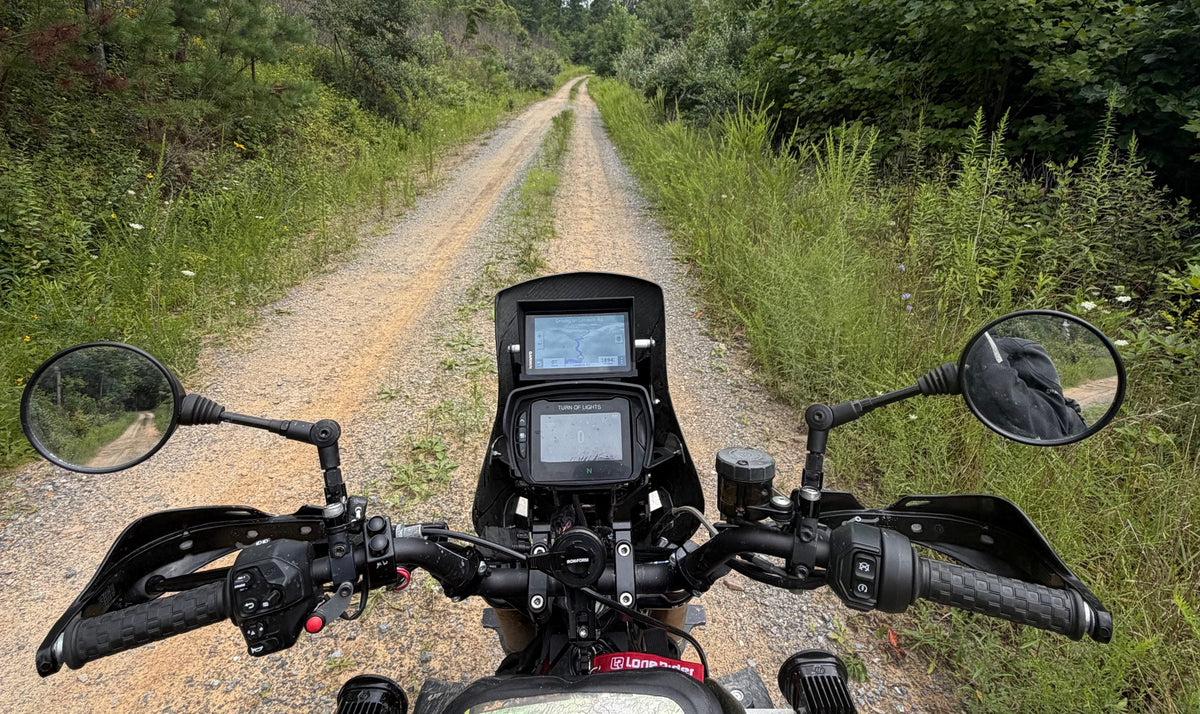
How a bike feels off road comes down to where you touch it. There are four places: bars, pegs, seat and tires. Get those right and the FTR is a different motorcycle on two-track.
If you have the Rally, Indian already did some of this for you. It came with spoked wheels, Pirelli Scorpion Rally STR tires and a ProTaper bar mounted two inches higher than the other FTRs. The base FTR and the S came with cast wheels, Dunlop DT3-R tires and the tracker seat.
The ADV kit covers the cockpit, protection and luggage. But you'll want a few more things to ride this on trails with confidence.
Tires and wheels
Tires come first. They're the only part of the bike touching the ground. The stock Dunlops are fine on pavement and hard-packed gravel, but if you want to see some mud or loose fresh gravel, knobbies help a lot.
I run Motoz Tractionator Rallz in the stock sizes, 120/70-19 front and 150/70-18 rear. In all my years riding big bikes off road, it's the best tire I've had. It feels locked on the street and bites well in the dirt. I like the compound a lot. It feels planted. Motoz rates it 20 percent road and 80 percent dirt.
I wanted security in all conditions and hookup in loose, chunky gravel. I'd give up some mileage for that, but I didn't want a 1,000-mile tire. I also need a tire I can run with tubes. Nothing in the FTR rear size beat the Rallz on all of it. The Metzeler Karoo 4 and the Mitas Enduro Trail XT+ Dakar came closest, and both gave up something, usually tire life. The Rallz isn't cheap, and I still rebuy it.
YMMV. This is what works for me and where I ride, which is mostly loose Appalachian two-track and fire roads. If you ride more pavement than dirt, a 50/50 tire will last longer and give up less on the street.

The stock wheels are cast, and depending on how chunky your riding is, they can work fine. Spoked wheels take a hit from a rock or a square edge better than cast, and you can true one at home if it bends. They also look right on this bike. There's always a set on eBay.
Spoked wheels mean tubes. Out east, between the rocks and the roots, pinch flats are the common flat. I run ultra heavy duty tubes. They have a much thicker wall and are a lot harder to pinch. Carry a spare and the irons to change it.
Bars
The stock bars are too low to stand on for any distance. Most aftermarket bars need modifications to fit the FTR switchgear. I haven't found one with enough straight grip length before the bend. So in practice you're choosing between the Indian OEM bars, a low-profile ProTaper or the high rally bar.
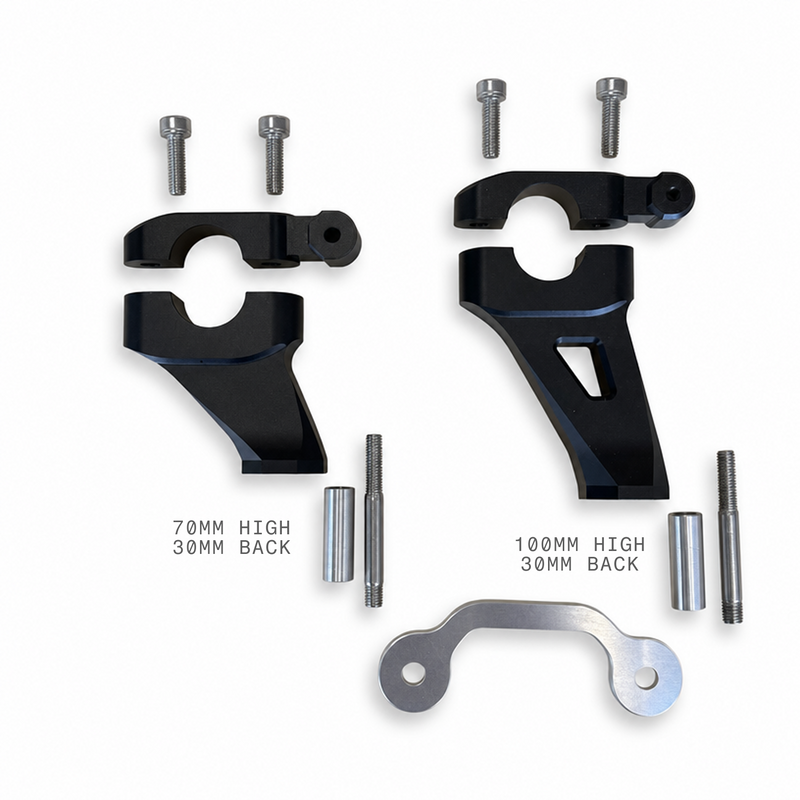
The rally bar sits two inches above stock. If you'd rather keep the bar you have, our 100 mm risers get you higher than that and bolt to the stock clamps.
Hand guards
Get hand guards with a metal backbone. When a 500-plus pound bike goes down, the guard is often the first thing to hit the ground, and plastic alone won't take it. A metal-backed guard also saves your levers.
I like the old Acerbis Rally Pro guards. They're robust and I like the organic form. I've tested them on a lot of bikes. I see Barkbusters everywhere these days too. Get what you like, as long as there's aluminum or steel inside the plastic.

Pegs
The FTR pegs sit high, and getting a big off-road boot under the shifter is tight. Pivot Pegz help with both.
A pivot peg rocks forward and back on a hinge where it mounts to the bike. When you're standing and move your weight toward the bars or back over the seat, the peg tilts with your boot and your sole stays flat on it. The tilt also gives you room to work a big boot under the shift lever.
Seat
The stock seat was my one-hour limit. I love this bike, but sitting on it for a solid day is impossible for me. I layered two sheets of different density surgical foam onto mine, and now I can sit for two hours instead of one. I don't know why it's so hard for a factory to make a good seat. I still need an Airhawk for a full day.
If you'd rather buy than build, Saddlemen makes seats for the FTR. The only problem is they aren't compatible with our pannier and luggage racks. If that is something you want to explore, let us know, and maybe we can adapt our kit for you.

Protection and clearance
Put a guard on the radiator. A misplaced rock off the front tire can still ding it. R&G makes radiator guards for the FTR in aluminum and stainless, and an oil cooler guard.
Until our crash bars are out, R&G frame sliders are the other thing I'd add. On the road they'll handle a flat drop fine. Off road they might help and they might not. (Don't ask how I know. Twice.)
If you don't need the panniers, a high pipe gets you a lot more ground clearance under the skid plate. S&S makes a Grand National 2:2 high pipe for the FTR, styled after the FTR750 flat track bikes. The luggage rack still works with it. You can always throw a Mosko Moto or Lone Rider duffle over the back if you want to trail ride to a moto camp.
Get the touchpoints sorted first.
I'd start with tires and bars. You feel them on the first ride. Then the seat, pegs and hand guards.
The rest of the bike is what I make. The nav tower, skid plate and luggage are designed to transform the FTR from a Saturday afternoon backroad bike into an all road touring bike. Once your touch points are right, the kit is the next step.
The parts and the illustration in this post